The World According to the Not-So-Great Product Manager
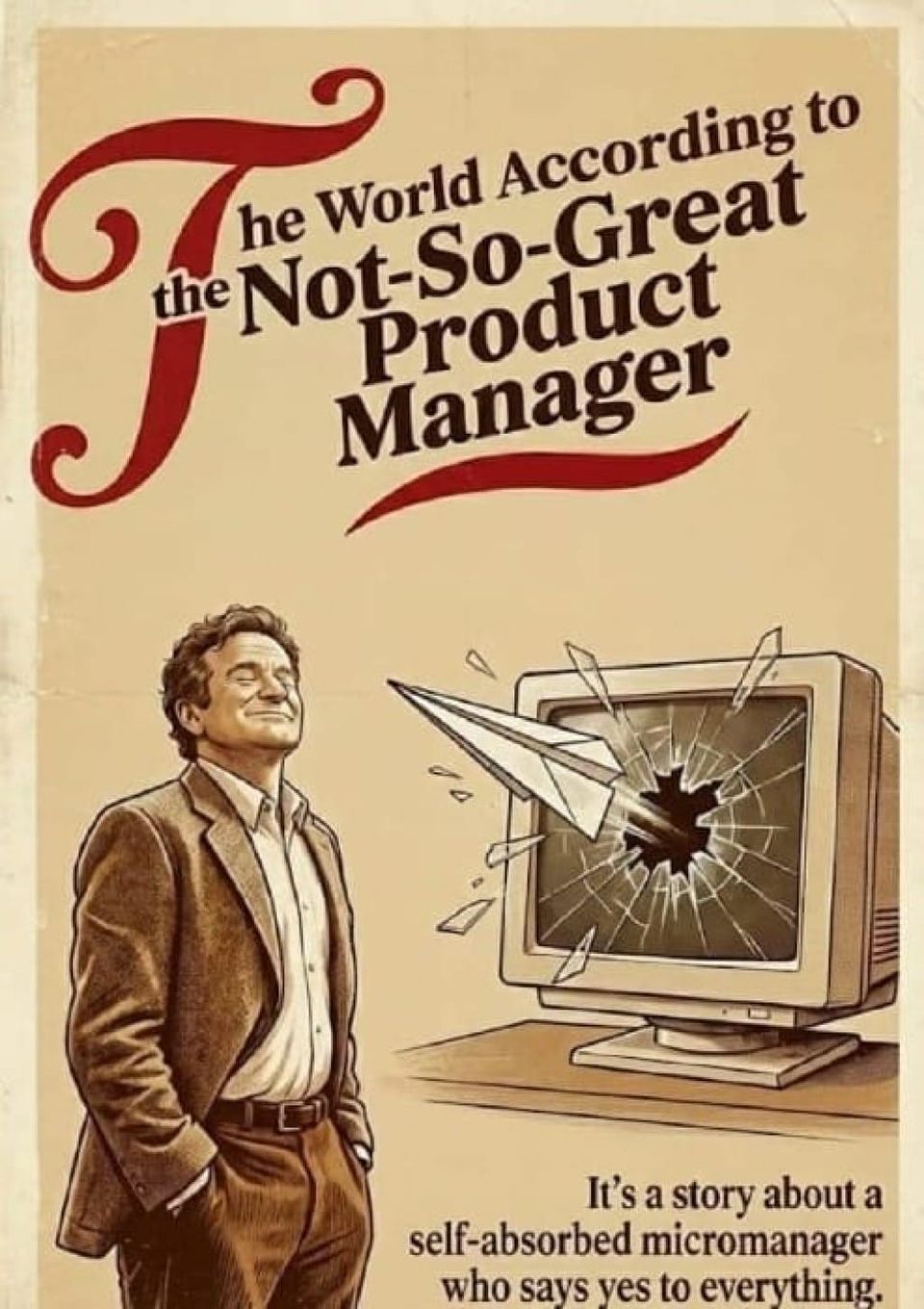
Sometimes the title and the cast of a movie can be misleading. You expect a comedy.... maybe something a little quirky and heartfelt. But instead, you're wondering how you just spent two hours watching a movie with a meandering plot, questionable behavior, and topped-off with terrible decision making.
Take The World According to Garp (1982), starring Robin Williams, Glenn Close, and John Lithgow. With that lineup, you'd think you were in for a laugh. Instead, you get a front-row seat to bad decisions and behavior that lead to less-than-ideal outcomes.
Kinda like a bad product manager.
The film follows Garp, a character who means well, moves fast, and still manages to leave a trail of avoidable wreckage. Sound familiar? The product management world has its own version of Garp. Enthusiastic. Confident. Armed with frameworks and absolutely certain they are helping.
The not-so-great PM has a few things to unlearn.
Micromanagement is Leadership
It is not.
Bad PMs hover. They insert themselves into every design conversation, nitpick tickets, and mistake constant visibility for competence. What they actually create is a team that stops thinking because someone else is always about to override the decision anyway.
At one company, we made a deliberate shift toward empowered teams built on trust and clear ownership. Dev cycles improved. Standups stopped feeling like performance reviews. The work got better because the people doing it had actual room to do it.
Great PMs remove blockers. They do not become one.
"I'm the CEO of the Product"
There is a big difference between having a CEO mindset and leaning on a title that was never officially yours.
Early in my career, I needed the dev team to prioritize a critical fix affecting adoption of a new Autopay feature. I had no authority over them. So I did not use authority. I walked them through the business risk clearly enough that they mobilized without any pressure from me.
That is influence. It is slower to build and more durable than any org chart.
If you have ever said "because I'm the PM" in a meeting, you have already lost the argument. It also suggests you read one product management book and stopped there.
Saying Yes is Being Helpful
It is not. It is avoidance with better branding.
Every yes costs something. Usually, it costs the thing you actually should have been building. One team I worked with revisited the entire work in progress (WIP) queue and made hard calls about what stayed. The result was fewer items in flight, better quality in a shorter window, and initiatives that actually connected to business objectives.
Saying no is not the job. But neither is saying yes to everything.
The job is making a call and being able to explain why.
Build What Stakeholders Ask For
If a stakeholder asks for a data warehouse disguised as a report, your job is not to build the data warehouse.
A PM's job is translation, not transcription. One version of this request came to my team, and instead of building what was asked, we paused and figured out what was actually needed. We delivered a lightweight tool that got them to the data they wanted in a fraction of the time.
Great PMs understand the ask underneath the ask.
Vision Beats Execution
Vision without execution is just a roadmap that ages badly.
We had a major platform overhaul. Rather than treating it as one enormous thing, we broke it into quarterly phases with specific business metrics attached to each milestone. Executives had better expectations. Engineers had something concrete to move toward. We reached a consistent delivery cadence and launched key phases on time.
Strategy matters. But execution is how strategy becomes true.
Market Trends Are Someone Else's Problem
They are yours too.
One simple routine changed how we worked: attending sales and support calls every week. Within a month, we had spotted a trend that meaningfully shifted how we were thinking about the market. Not from a dashboard. From listening.
Great PMs stay close to the signal, even when it is uncomfortable.
Business Acumen Is Nice to Have
It is not nice to have. It is the whole foundation.
When I first started out, my manager enrolled me in a workshop led by Steven Haines at Sequent Learning. I had no idea what I was walking into. The lessons from that room are still part of how I think about product today. Once I applied financial principles to our initiatives, I started prioritizing work that drove retention in areas that mattered to the company's growth trajectory.
Product management is not backlog management. It is business management with a product lens.
Roll the Credits
Garp ends the way it has to. The chaos catches up. The decisions compound. The consequences land.
What separates a memorable PM from a forgettable one is not charisma, jargon, or the ability to recite frameworks on demand. It is discipline. Clarity. A genuine understanding of the business problems behind the features.
Be honest about what you know. Be focused on what matters. Be a little better than yesterday.
Unlike Garp, you get to choose how your story ends.