Product: The Management – Heroes Edition
A little over a year ago, I published the first Tales of Product article.
I didn't know if anyone would read it. I didn't know if this thing would land. I definitely didn't know I'd still be here 12 months later, writing about Monopoly villains, Jaws-sized stakeholders, and by last spring- a full deck of product management trading cards.
But here we are. One year. A bunch of content and a community of people who somehow appreciate that product work makes more sense when you tell it through movies, games, and the occasional 1980s cartoon reference.
Last year, I introduced you to the villains of product, the five cards from Tales of Product: The Collectible Card Game that represent every chaos grenade we've all dodged (or failed to dodge) in our product careers.
The response? Apparently, we've all met Scope Creep. We've all survived Executive Override. And we've all stared at Zombie Backlog wondering why we can't just let it die.
But here's the thing about villains: they don't win unless the heroes never show up.
So, this week, to mark one year of Tales of Product, I'm dealing the other side of the deck (inspired by another famous trading card game). Five hero cards. Each one a practice, mindset, or archetype that shows up when it matters most and turns a product disaster into a product story worth telling.
These are the heroes that got us through over the years. The ones that kept the work from falling apart when the strategy or roadmap imploded. The ones we reached for when the frameworks stopped working and we had to figure it out ourselves.
Keep these close. You're going to need them.
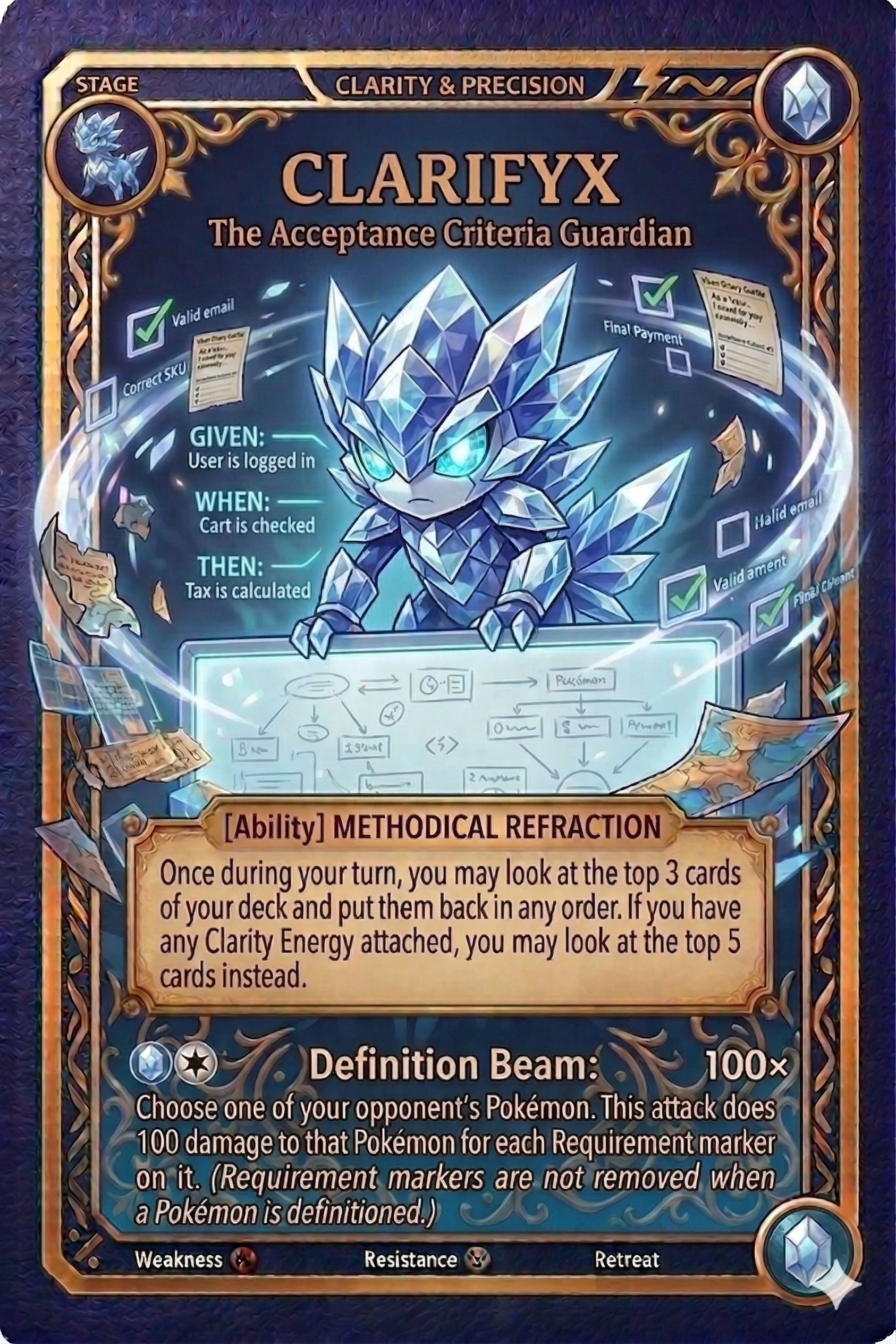
Clarifyx – The Acceptance Criteria Guardian
Type: Clarity
Tagline: Asks the question that saves the sprint.
She shows up early. Always. Before the story hits the backlog, before the design gets handed off, before the Devs start their work. She asks one simple question: "What does done look like?"
Not vaguely. Not "make it work." Specifically. With examples. With edge cases. With the kind of clarity that makes Missed Requirements turn around and walk away.
Special Move:
- Edge Case Vision – Reveals hidden requirements before they break production.
Passive Ability:
- Blocks ambiguous stories from entering sprint planning.
Weakness:
- Struggles in teams that reward speed over precision.
How to Play This Card:
- Never accept a story without testable acceptance criteria
- Run "what if" scenarios during refinement: "What happens when the user does this twice?"
- Use the Given/When/Then format to force specificity
- Make "definition of done" a pre-sprint checklist, not a suggestion
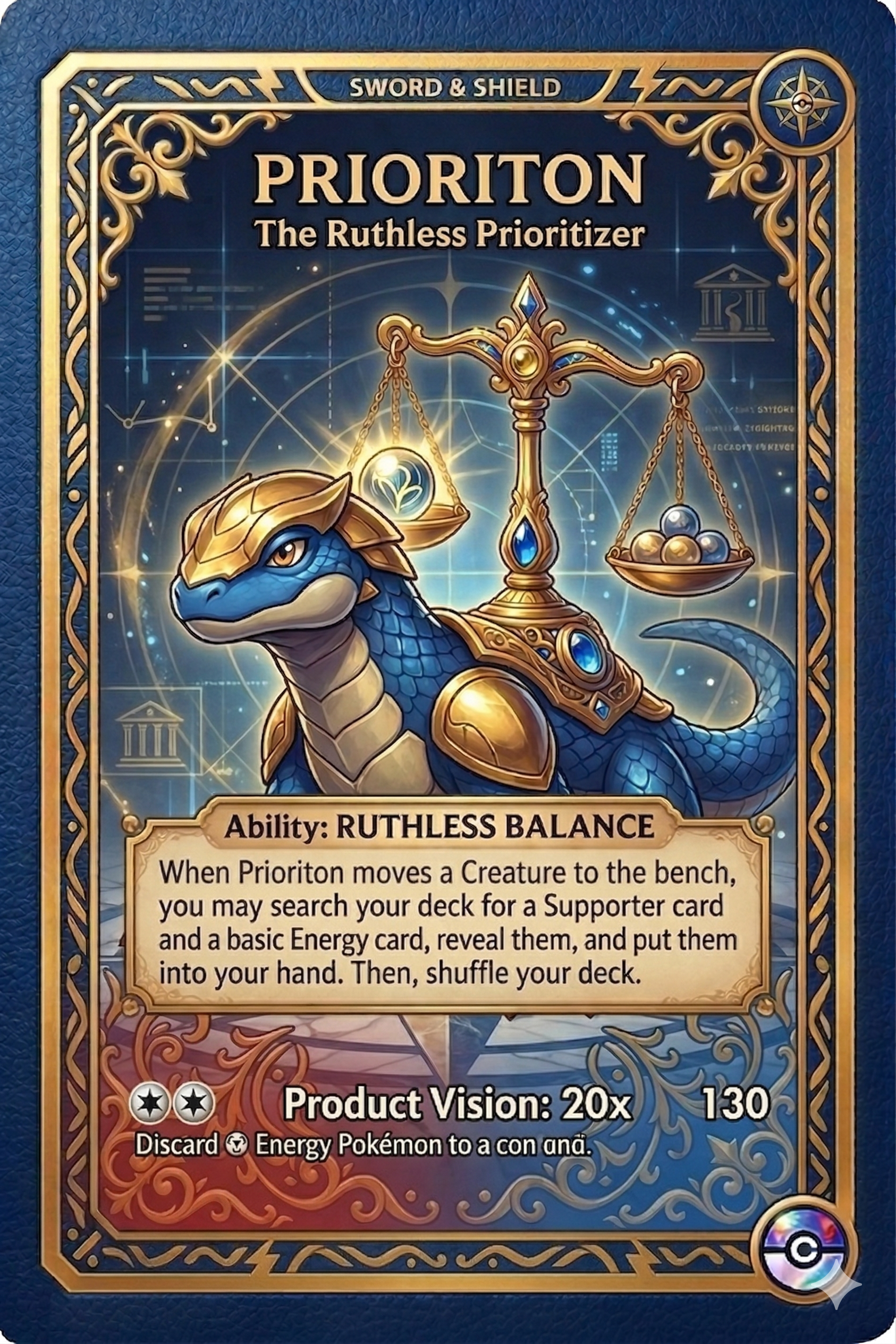
Prioriton – The Ruthless Prioritizer
Type: Strategy
Tagline: Knows what not to build.
He doesn't say yes to everything. He doesn't say no to everything either. He says: "Show me the problem we are solving for."
Scope Creep hates him. Executive Override tries to bypass him. But he holds the line with one weapon: ruthless, documented prioritization. Every feature request gets scored. Every pet project gets compared to existing goals. Nothing gets added without something getting removed.
Special Move:
- Impact Lock – Forces ROI calculation on all new requests.
Passive Ability:
- Prevents features from entering backlog without documented prioritization.
Weakness:
- Vulnerable to teams with no scoring framework.
How to Play This Card:
- Use a scoring framework (RICE, value vs. effort, etc.) and stick to it
- Make prioritization visible; share the ranked backlog with stakeholders
- Enforce a "one in, one out" rule for mid-sprint requests
- Practice the phrase: "Great idea. Here's what we'd need to deprioritize."
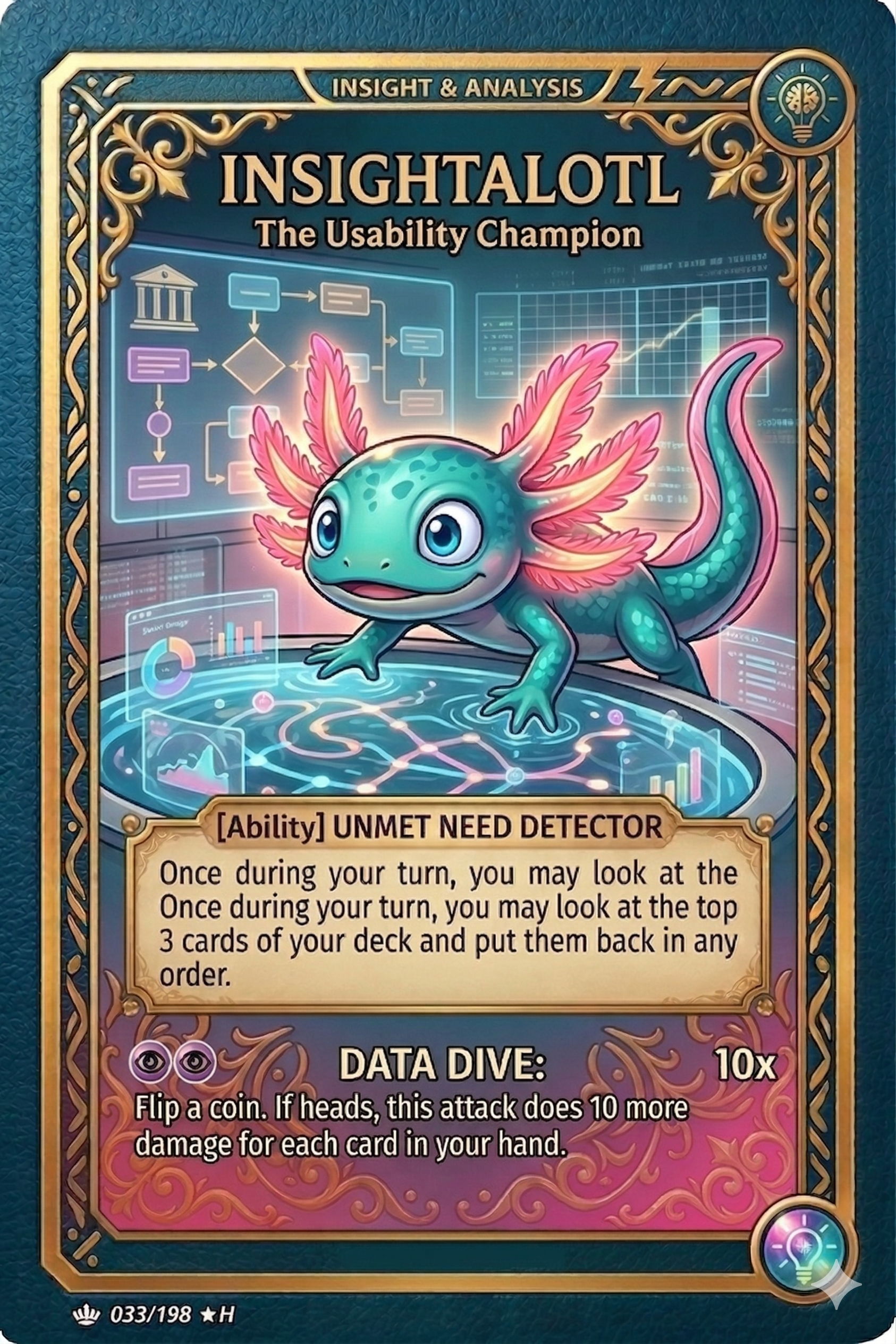
Insightalotl – The Usability Champion
Type: Insight
Tagline: Knows what users really want.
She doesn't trust wireframes. She doesn't trust stakeholder opinions. She definitely doesn't trust "I think users will like it."
She brings users. Real ones. Early and often. She watches them try the prototype, stumble on the flow, and ask questions that no design review ever surfaced. Bad UX doesn't survive her sessions.
Special Move:
- Customer Compass – Reveals hidden motivations in any feature request.
Passive Ability:
- Boosts Bad UX resistance across the team.
Weakness:
- Suffers in environments where no one talks to users.
How to Play This Card:
- Run usability tests before build, not after launch
- Use 5-second tests to catch broken flows quickly
- Track usability metrics (task completion, error rate) like you track velocity
- Bring recorded user sessions to planning meetings; nothing convinces faster
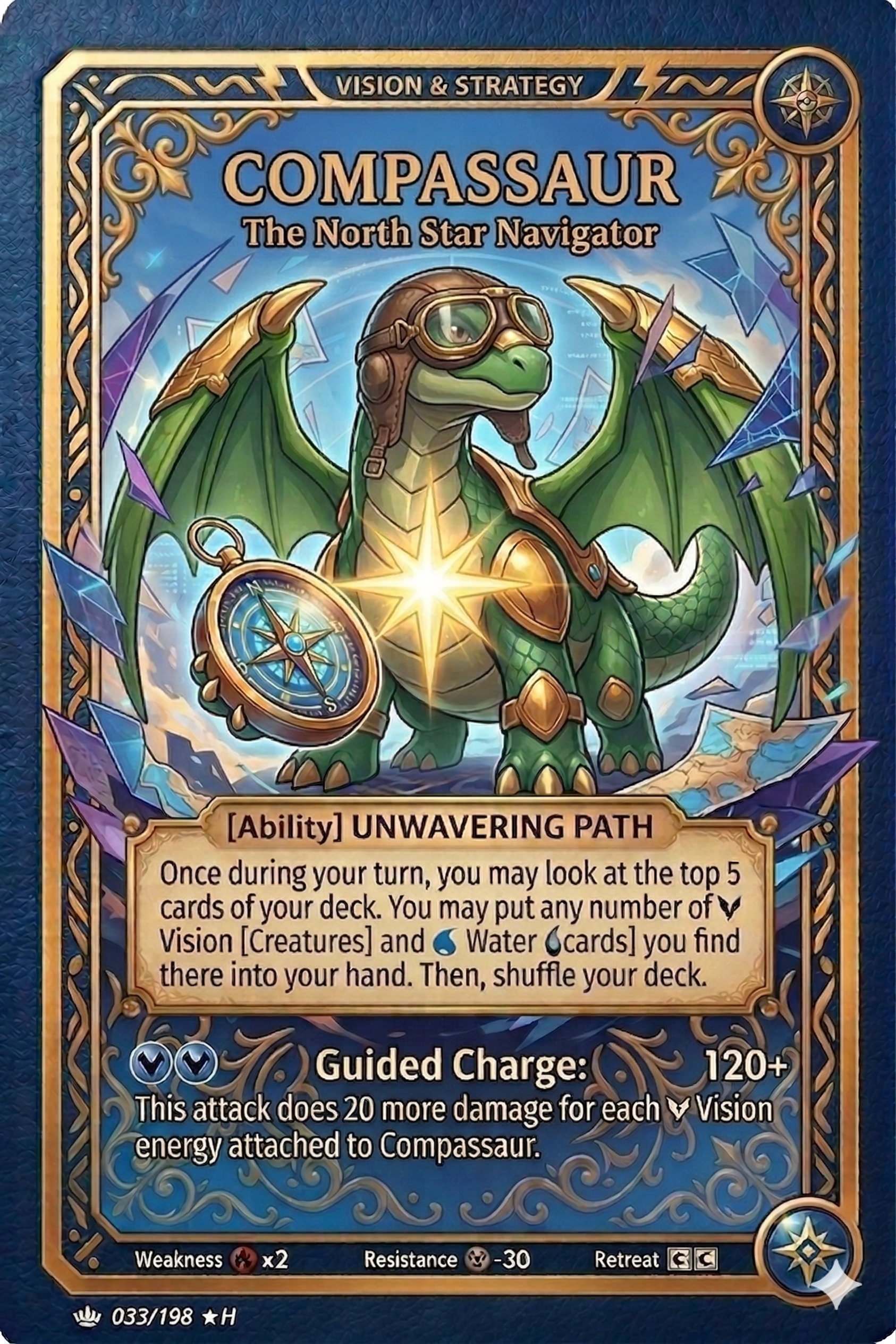
Compassaur – The North Star Navigator
Type: Vision
Tagline: Knows where the ship is actually going.
He doesn't argue with Executive Override. He doesn't need to. He has something better: a documented product strategy that everyone has seen, agreed to, and can reference.
When the mid-sprint pivot arrives, he doesn't say no. He asks: "How does this serve our north star?" He points to the strategy deck. He shows the metrics that matter. He reminds the room what success actually looks like.
Executive Override doesn't vanish but it stops rewriting the game when someone knows the rules better than it does.
Special Move:
- Strategic Alignment – Forces all initiatives through the product strategy filter.
Passive Ability:
- Ties every decision to measurable outcomes that matter.
Weakness:
- Powerless without a documented product strategy.
How to Play This Card:
- Maintain a one-page product strategy that leadership has signed off on
- Tie every roadmap item to a specific strategic pillar
- Track north star metrics religiously and share them widely
- When new ideas arrive, ask: "Which strategic goal does this advance?"
Run quarterly strategy reviews to keep everyone aligned
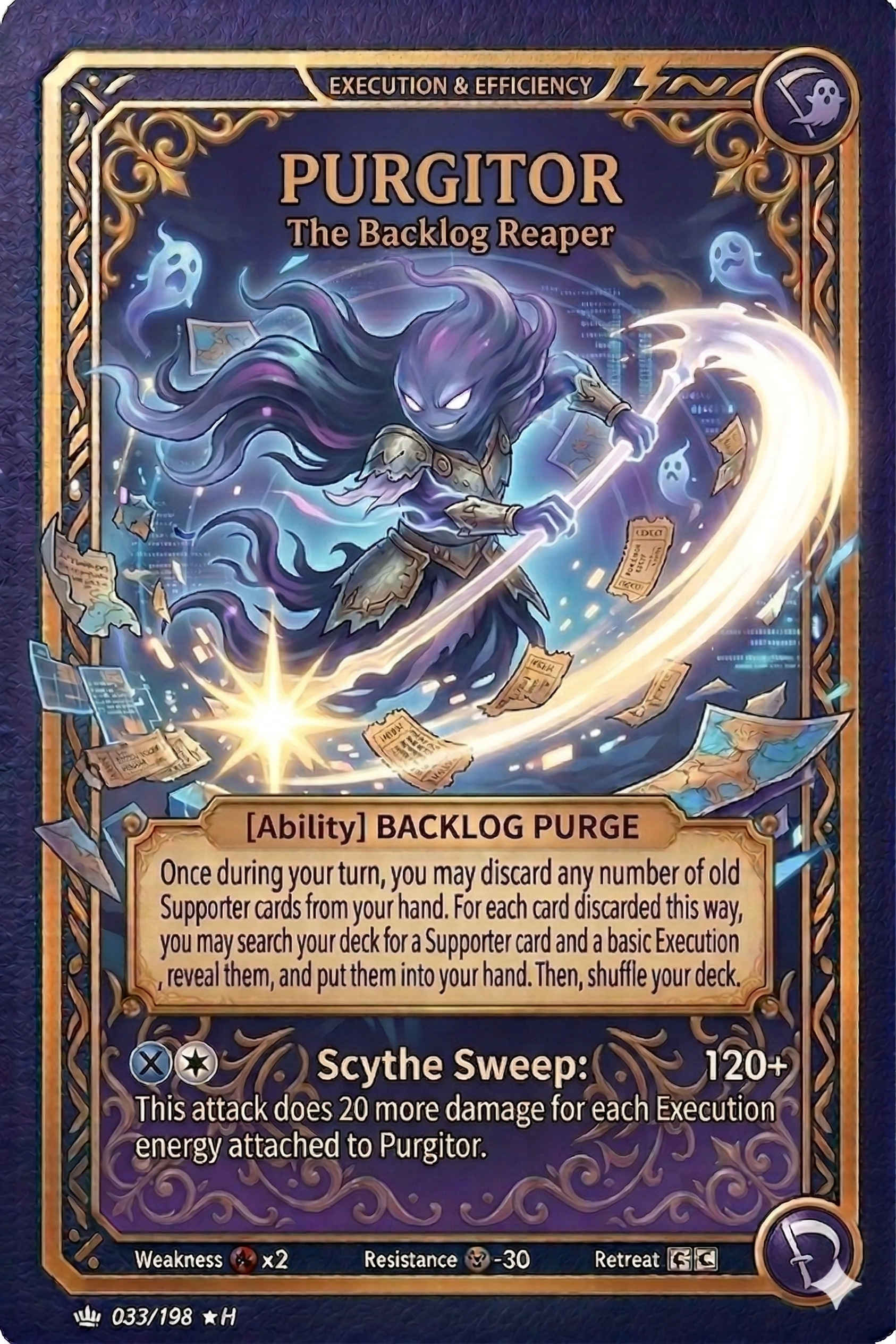
Purgitor – The Backlog Reaper
Type: Execution
Tagline: Knows when to let go.
She doesn't hoard tickets. She doesn't preserve ideas "just in case." She understands that a backlog is not a museum; it's a working tool.
Every quarter, she runs the purge. Old stories get reviewed. Zombie tickets get archived. The team breathes easier. The board makes sense again. And Zombie Backlog? It stays buried.
Special Move:
- Purge Protocol – Archives tickets older than 90 days with ruthless efficiency.
Passive Ability:
- Caps backlog size and enforces it like a performance metric.
Weakness:
- Defeated by teams that hoard ideas "just in case."
How to Play This Card:
- Hold quarterly "defend or delete" backlog reviews
- Archive (don't delete) old items for historical context
- Cap backlog size and enforce it like a performance metric
- Use a rule like: "If it hasn't been touched in 90 days, is it still a priority"
You don't need all five heroes in every part of your practice. But you need at least one. The Acceptance Criteria Guardian before refinement. The Ruthless Prioritizer when scope starts creeping. The Usability Champion before you launch. The North Star Navigator when the strategy looks like it’s walking away. The Backlog Reaper when the board becomes unmanageable.
Play them when it counts.
And if you're lucky, you won't even need to shuffle the villain deck.
Gratitude
Thanks for being part of year one.
The notes from people who said a story finally made something click. The ones who forwarded a piece to their team because it explained what they'd been trying to say for weeks.
That's the part that matters.
So, here's to year two. More stories. More heroes. Maybe a few more villains along the way.